
Braised Pork with Chestnuts: Sweet, savory, and full of autumn richness
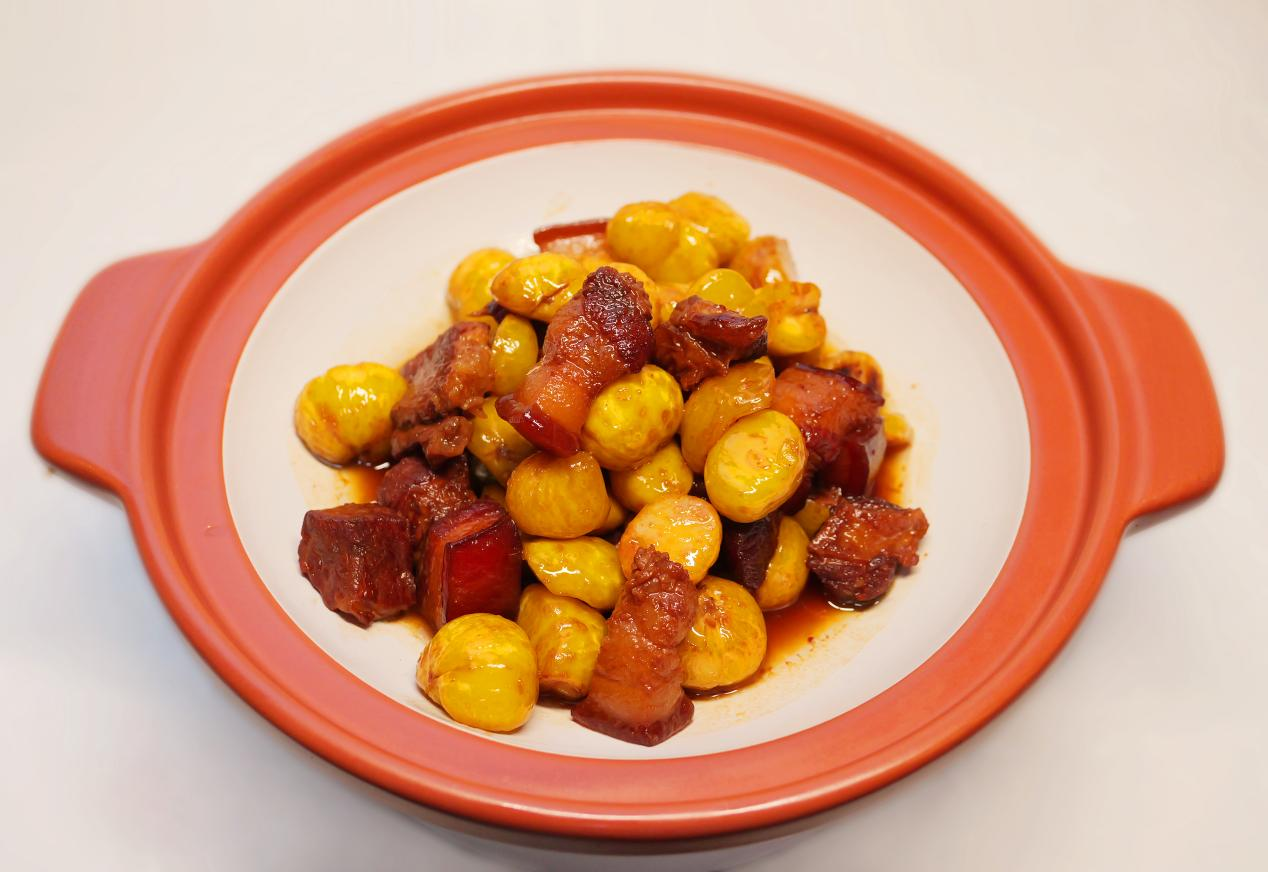
Qianshan’s chestnuts are plump and glossy like amber. When chestnuts meet pork belly, sweetness and savoriness come together in perfect balance. The secret lies in patience and heat control. Pork belly is first rendered until fragrant, then slowly braised together with chestnuts so the sweetness of the chestnuts absorbs the richness of the meat, while the pork gains a subtle nutty aroma in return. Golden chestnuts glisten beneath a rich sauce, while the tender pork nearly trembles at the touch of chopsticks. The first bite brings the soft sweetness of chestnuts, followed by the deep savory richness of braised pork — a flavor that feels like tasting the entire harvest season in one mouthful.
I. Core Ingredients (Serves 2–3)
1. Main Ingredients
·Skin-on pork belly, 500g: Choose rib-side pork belly that is well-marbled, with clear alternating layers of lean meat and fat. Cut it into 3–4 cm cubes. This distinct layering gives the finished dish its rich, tender texture while keeping it from tasting greasy.
·Tianzhushan chestnuts, 300g: A local specialty of Tianzhushan,these chestnuts are plump and naturally starchy. They are the soul of this dish. Fresh chestnuts should be shelled and peeled, while frozen peeled chestnuts may be used directly.
2. Aromatics and Seasonings
·Scallions, ginger, 1 star anise, and a small piece of cassia bark. These aromatics enhance fragrance and help remove any meaty odor. Use them sparingly so they do not overpower the natural sweetness of the chestnuts.
·Rock sugar, 15–20 g, used to caramelize the sauce and give the dish its glossy reddish-brown color.
·Light soy sauce, 2 tablespoons, and dark soy sauce, 1 tablespoon. Light soy sauce adds savory depth, while dark soy sauce is used mainly for color.
·Chinese cooking wine, 1 tablespoon, and a little salt.
II. Key Cooking Techniques: Rendering the Fat and Timing the Braise
·Preparation: Place the pork belly in a pot of cold water. Add ginger slices and cooking wine, then blanch the pork. Skim off the foam, remove the pork, and drain well. For fresh chestnuts, score a cross on the top, boil for 3–5 minutes, and peel off the shell and inner skin while still hot.
·Render the fat and build aroma: Do not add oil to the pan. Add the pork belly and stir-fry over medium-low heat until the surface is lightly browned and the edges are slightly curled. This step renders out excess fat and is the key to a rich but non-greasy result. Remove the pork, pour off the excess fat, and leave only a small amount of oil in the pan.
·Caramelize the rock sugar: Add the rock sugar to the remaining oil and cook over medium-low heat until it melts and turns amber. Quickly return the pork belly to the pan and toss until each piece is evenly coated with the caramelized sugar.
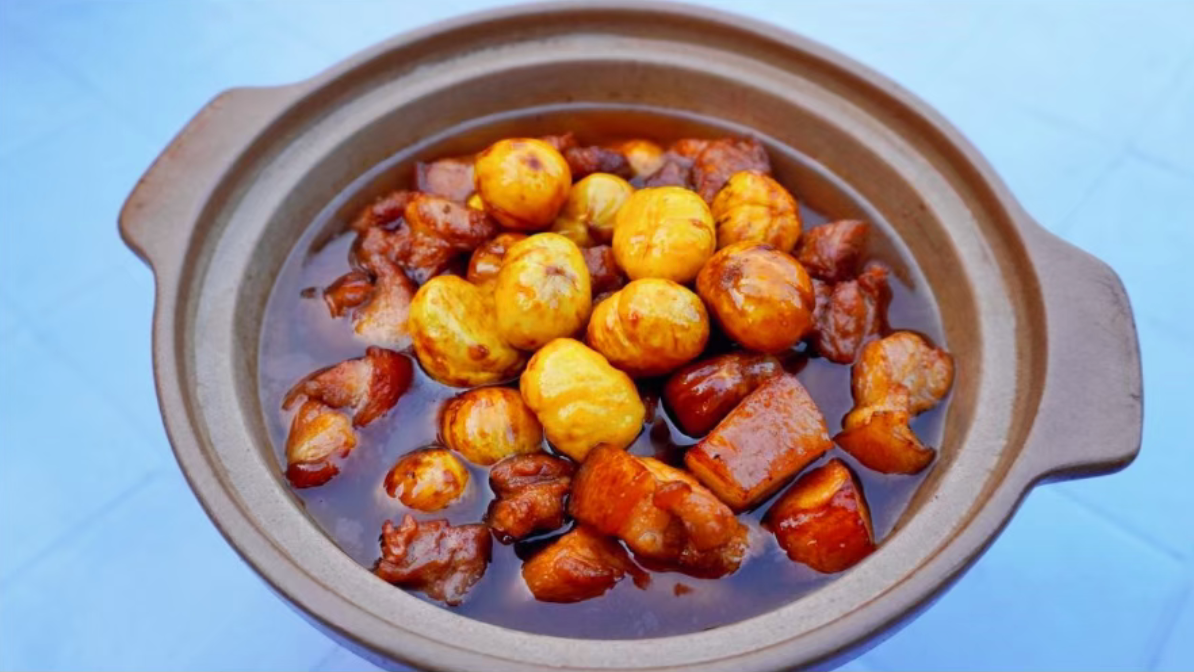
·Slow-braise until tender and flavorful: Add the scallions, ginger, star anise, and cassia bark, and stir-fry until fragrant. Pour in the light soy sauce and dark soy sauce, then stir well. Add enough boiling water to just cover the pork. If more water is needed during cooking, use hot water. Bring to a boil over high heat, then reduce to low heat, cover, and simmer gently for 40–50 minutes, until the pork can be pierced easily with chopsticks.
·Add the chestnuts and reduce the sauce: Add the prepared chestnuts and continue simmering over low heat for 15–20 minutes, allowing them to absorb the braising juices. Finally, turn the heat to high and reduce the sauce until it becomes thick and glossy, clinging evenly to the pork and chestnuts. Season with a little salt before serving.
III. Flavor and Texture: The Signature Taste of the Tianzhushan Chestnut Version
·Color and aroma: The finished dish has a glossy reddish-brown sheen, with the sauce evenly coating every piece. The aroma is layered and well-rounded, combining the deep soy-braised fragrance of pork belly with the delicate natural sweetness and nutty aroma of Tianzhushan chestnuts. It is full-bodied but never overpowering.
·Texture of the pork: After careful rendering and slow braising, the fatty layers become melt-in-the-mouth, the lean meat is tender and yielding rather than dry or stringy, and the pork skin is soft, glutinous, and pleasantly springy. The dish has no heavy greasy aftertaste, and each bite carries a gentle chestnut sweetness.
·Texture of the chestnuts: Once braised,Tianzhushan chestnuts become floury, soft, and creamy-textured, almost melting in the mouth while still holding their shape. They soak up the savory meat juices, which balance their natural sweetness and create a rounded savory-sweet flavor. In this dish, the chestnuts are not merely an accompaniment; they are often the most memorable bite.
·Overall flavor: Savory and sweet in perfect balance, this dish has the richness of classic soy-braised cooking without feeling heavy. It is a hearty, warming centerpiece dish for autumn and winter. The glossy sauce is especially delicious when spooned over rice, bringing together the satisfying comfort of a staple food and the deep aroma of slow-braised ingredients.
