
Two Rulers, Three Outcrops: Three Geological Heritage Sites in Tianzhushan UNESCO Global Geopark Inscribed as World Geological Heritage Sites
 52
 2026-11-12
The International Union of Geological Sciences (IUGS) has announced the third list of 100 world geological heritage sites in the Algarve, Portugal, and 'the Triassic Dabie Mountains ultrahigh-pressure metamorphic belt of China' is on it. When the news reached Qianshan, the caretaker at Hanchangchong was clearing weeds beside the outcrop — that slope of roughly one square kilometre is one of the three geological sites selected this time.
This is Anhui Province's first IUGS world geological heritage site, ending the province's previous absence from the list; three sites in China were selected this time, bringing the national total to 13. The heritage site was nominated on the strength of three typical metamorphic rock outcrops — Xindian and Hanchangchong (Shuanghe) in Qianshan City and Bixiling in Yuexi County — all of them within Tianzhushan UNESCO Global Geopark, which stands in the core section of the belt.
I. Two 'Rulers' That Measure How Deep the Continents Can Go
When rock is carried deep into the Earth, a change in temperature and pressure makes its minerals rearrange themselves under the new conditions; this process is called metamorphism. Minerals therefore become a kind of ruler, by which we can work backwards to how deep the rock once travelled.
Wang Qin, professor at the School of Earth Sciences and Engineering, Nanjing University, explains that quartz turns into coesite only below 80 kilometres, and graphite into diamond only below 120 kilometres. With two such precisely graduated 'rulers', the appearance of the mineral is equivalent to a depth reading.
The Dabie Mountains happen to have preserved both minerals. Neither is stable at the surface — both retrogress to quartz and graphite — and they survive today only because the rock was exhumed rapidly and the minerals were sealed inside garnet and other hosts. Reading these two rulers took five years. In 1987, Xu Zhiqin, academician at Nanjing University, identified coesite in eclogite at Changpu, Yuexi County, within the Geopark — the first metamorphic coesite in Asia; the following year she reported the discovery at an international tectonics conference in Huairou, Beijing. In 1989, Wang Xiaomin of Stanford University in the United States (in the journal Geology) and Okay of Istanbul Technical University in Turkey (in the European Journal of Mineralogy) published papers in succession, and the international geological community formally confirmed the Dabie Mountains as the world's third locality of metamorphic coesite. In 1992, Professor Xu Shutong of the Geological Survey of Anhui Province and co-authors reported in Science the discovery of microdiamond in eclogite at Xindian, within the Geopark — the second occurrence in metamorphic rocks worldwide and the first in eclogite. The conclusion was not received quietly at first: some international peers questioned it, even rejected it, and it was accepted only after more samples, infrared spectroscopy and isotope work followed. The National Natural Science Foundation of China then launched a key project under the Eighth Five-Year Plan in 1992 and a major project under the Ninth Five-Year Plan in 1997, placing the belt among frontier research topics.
Read together, the two rulers give a clear conclusion: these rocks, now bare on the hillside, were once carried down to the upper mantle at 80 to 120 kilometres and then brought back to the surface. Under classical plate tectonics this is hard to accept — when plates converge, only the dense, sinkable oceanic lithosphere can subduct into the mantle; continental lithosphere, less dense and more buoyant, was thought incapable of it. The evidence from the Dabie Mountains changed that understanding: continental lithosphere can subduct into the upper mantle as well. 'This has opened a new window onto the evolution of orogenic belts and the cycling of material in the Earth's deep interior,' Wang Qin says.
The belt lies in the western section of the Dabie–Sulu orogenic belt, formed where the North China Block and the Yangtze Block collided and welded together. In the Triassic, about 240 million years ago, the two continental blocks underwent large-scale continent–continent collision here; enormous volumes of continental crust were subducted to mantle depths of 80 to 120 kilometres and, after ultrahigh-pressure metamorphism, were rapidly exhumed to the surface. The belt stretches for about 2,000 kilometres and crops out over some 30,000 square kilometres. Among the world's ultrahigh-pressure metamorphic belts it is recognised as the largest, the most deeply exhumed, the best exposed and the richest in ultrahigh-pressure mineral and rock assemblages; in this list IUGS describes it as 'the largest, most extensive and best-preserved ultrahigh-pressure metamorphic belt on Earth'.
The coesite and microdiamond yielded by eclogite within the belt are the decisive evidence that continental crust can subduct deep into the mantle. Chinese and international geologists therefore call the belt a 'natural laboratory' for continental dynamics and a 'geological history book' of deep continental subduction. The core area inscribed on this list is precisely these three outcrops: three windows through which the belt shows itself above ground.
II. Forty Years of Breakthroughs, Recorded at These Outcrops
Coesite and diamond opened the door. Over the following four decades researchers worked these outcrops one question after another, and the first thing they pinned down was time. Li Shuguang, academician at China University of Geosciences (Beijing), and colleagues ran a Sm–Nd isochron on garnet, omphacite and rutile from the coesite-bearing eclogite at Shuanghe (Hanchangchong) and obtained an age of 226 million years (226.2 ± 2.9 Ma), fixing peak ultrahigh-pressure metamorphism in the belt at about 226 Ma; the rocks cooled rapidly between 226 and 219 million years ago, which marks the onset of exhumation.
Then, deeper still. Jin Zhenmin, academician at China University of Geosciences (Wuhan), and colleagues found acicular Ti–Cr magnetite exsolution lamellae in olivine of the Bixiling garnet peridotite. Such exsolution can form only in a high-pressure polymorph of olivine, which shows that this mantle rock came from far deeper than 120 kilometres. It is not subducted continental crust but a fragment of mantle that the orogeny carried up from depth.
Clues about material and fluids followed. Zheng Yongfei, academician at the University of Science and Technology of China, and colleagues found that δ18O in eclogite at Shuanghe (Hanchangchong) falls as low as −2.6‰, markedly light, showing that the rocks had been altered by meteoric water before subduction and afterwards never re-equilibrated their oxygen isotopes with the mantle. He therefore proposed the 'fried ice cream' model: the outside was heated right through while the core stayed cold, preserving the original low δ18O inside. A team led by Xiao Yilin at the University of Science and Technology of China reported in PNAS the identification of primary multiphase fluid inclusions in ultrahigh-pressure veins in Bixiling eclogite, the first direct evidence for the composition of natural supercritical fluids.
New rock types kept appearing too. Guo Shun, researcher at the Institute of Geology and Geophysics, Chinese Academy of Sciences, and colleagues discovered tourmaline-rich eclogite and veins for the first time in the Baiyangling area of Shuanghe (Hanchangchong) — the world's first tourmaline-bearing eclogite hosted in marble. The tourmaline formed by metamorphism of muscovite in impure marble, which shows that metamorphosed carbonate rocks are an important reservoir of heavy boron in subducted continental slabs, and opens a window onto deep fluid activity in subduction zones.
The three outcrops in the Geopark are the physical coordinates of these results. Xindian preserves that diamond — the hardest evidence of deep continental subduction. Hanchangchong (Shuanghe) crops out over about one square kilometre, where eclogite occurs together with three kinds of host rock — gneiss, marble and jadeite quartzite — in a single outcrop; the completeness of its ultrahigh-pressure rock types is rare in the Dabie orogenic belt, and since the 1990s it has been a classic outcrop dissected again and again by Chinese and foreign scholars. The eclogite–peridotite block at Bixiling crops out over about 1.5 square kilometres; it is the largest such block in the Dabie–Sulu orogenic belt and the second largest in the world, and the contact relationships between the block and its host rocks can be observed directly in the field. All three outcrops are reached by road.
Over more than 40 years, academicians and experts including Xu Zhiqin, Xu Shutong, Li Shuguang, Zheng Yongfei and Jin Zhenmin have worked here in succession, and a generation of younger and mid-career scholars has grown up alongside them; researchers from more than 30 countries have joined cooperative studies, producing over 1,000 papers and winning five National Natural Science Awards and National Science and Technology Progress Awards. 'A mecca for research on ultrahigh-pressure metamorphism and continental dynamics' is how Chinese and foreign geologists sum up the belt.
III. Fifteen Years of Watching over Three Outcrops
Tianzhushan's ties with the belt go back a long way. It was approved as a National Geopark in 2005 and, in September 2011, joined the Global Geoparks Network with this belt as one of its core values, becoming China's 25th and the world's 74th global geopark, with an area of 413.14 square kilometres. This world geological heritage site designation has fallen on land that has already been tended for fifteen years.
Protection runs all the way from planning down to the edge of each outcrop. Guided by the national geopark plan, the global geopark plan and the measures for the protection of geological relics, the Geopark applies tiered protection to its geological relics and defines control areas and protection standards; protective fencing is installed throughout to prevent trampling and unauthorised sampling; 24-hour video surveillance is deployed and connected to the scenic area's big-data centre for remote, real-time supervision. Beyond routine patrols, field surveys and research follow standard procedures, and the three heritage sites are the most tightly controlled places in the whole system.
It is local people who watch over the outcrops. Working with neighbouring villages, the Geopark employs villagers as full-time caretakers responsible for patrolling the sites, clearing weeds, tidying the surroundings, maintaining facilities and checking for hazards. The caretaker at Hanchangchong carries a notebook in which he records who came, on what day and what they said; it holds the names of academicians such as Yang Jingsui, Zheng Yongfei and Zhang Hongfu, and the signatures of scholars from more than 30 countries.
From 25 to 27 October 2024, after the International Symposium on Deep Earth Exploration and Applications (DEEP-2024), Professor Wang Qin of Nanjing University led a field visit here, accompanied by the IUGS President Hassina Mouri. The group walked from Laolongzui in Yezhai to Xindian in Shuihou, Bixiling in Changpu and Hanchangchong in Huangpu, examining eclogite, garnet peridotite and jadeite quartzite and discussing as they went. At Hanchangchong, Mouri posed for a photograph with the caretaker and leafed through the notebook. She said the explanations along the way had helped her understand the stories behind these outcrops, and thanked the Tianzhushan team for its efforts in protecting and popularising this geological heritage; at the discussion that followed, she and the accompanying experts affirmed the Geopark's work in geoheritage protection, geoscience outreach and geotourism, and considered that a geopark builds a platform for healthy interaction between geologists and the general public.
The outcrops are open to the public as well. Protection markers, warning signs and geological information boards are installed uniformly across the Geopark, stating the geological significance and the control requirements, and a themed popular-science corridor has been built to explain regional geological evolution and ultrahigh-pressure metamorphism clearly. The three outcrops have thus become open-air classrooms for nature education, where geology study programmes, family science activities and school study trips take place.
Research cooperation is just as solid. The Geopark maintains long-term partnerships with universities and research institutions including the University of Science and Technology of China, Nanjing University and the Anhui Geological Museum, providing field training sites for geophysics, geochemistry and related disciplines, supporting universities' honours-class field programmes, and jointly running 'First Taste of Geoscience' and the Dabie Mountains Summer Camp. The Geopark also hosts and co-hosts professional conferences and facilitates field visits by research teams, so that the latest results are exchanged at the outcrops themselves.
Tianzhushan now holds two world-class credentials: global geopark and world geological heritage site. Gao Jianqiang, director of the Tianzhushan Geopark Management Centre, says that the next step is to treat the three heritage sites as core monitoring targets, uphold protection first, research-driven support and rational use, deepen dedicated research on the ultrahigh-pressure metamorphic belt, and promote the integrated development of geoscience outreach, study travel and geotourism — so that this geological record left to us 240 million years ago may be seen by more people, and guarded for longer.
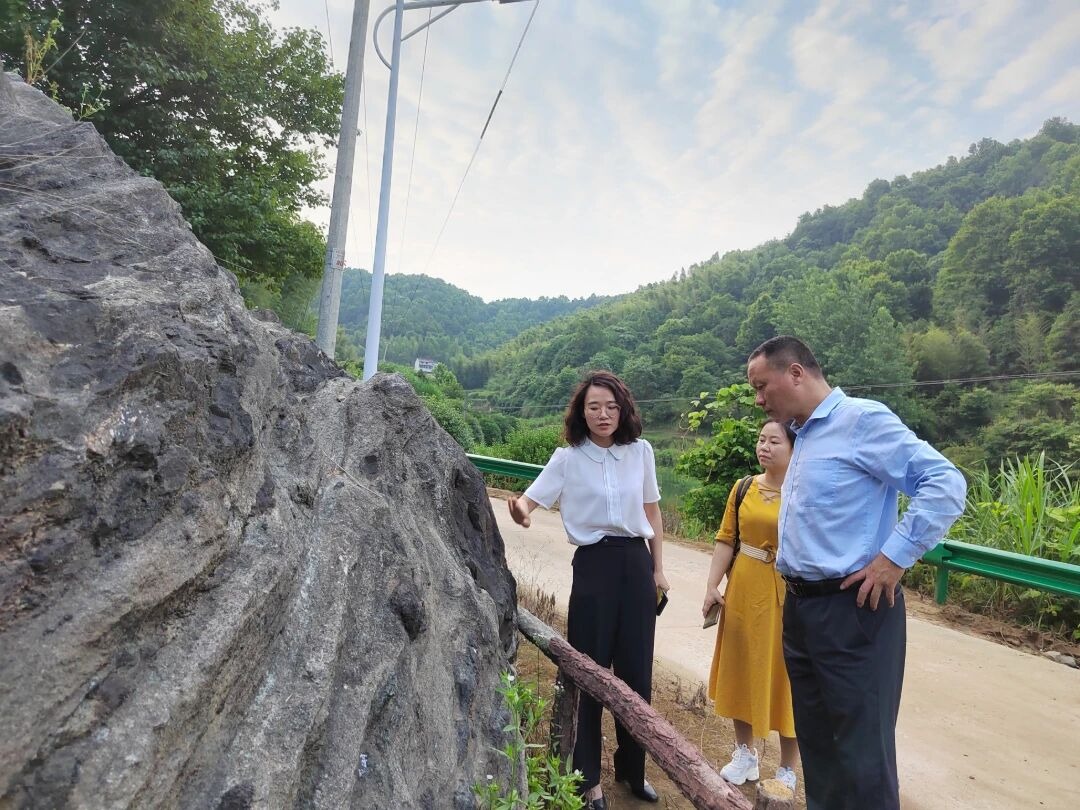
Senior staff of Tianzhushan UNESCO Global Geopark patrolling the Hanchangchong geological heritage site
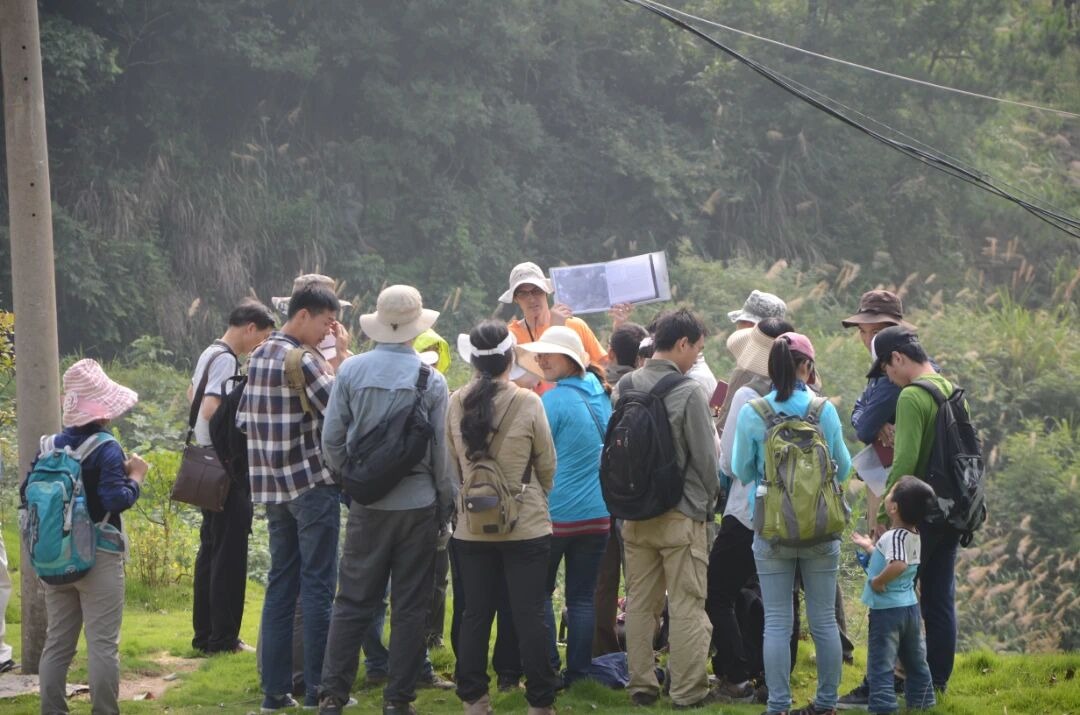
Nanjing University runs its bilingual summer geology field class at Bixiling
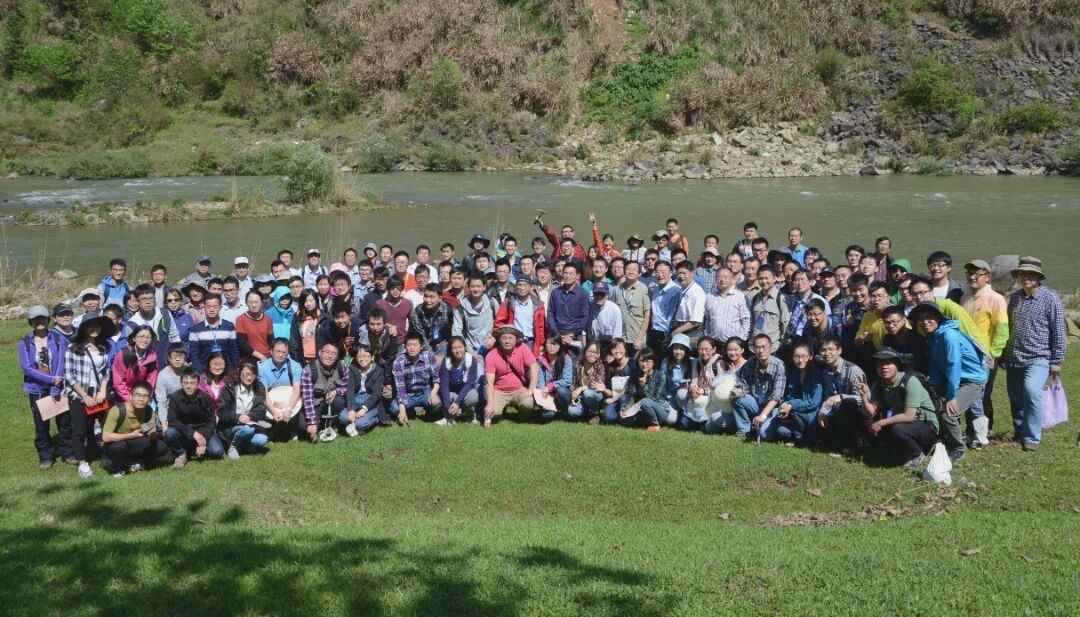
Participants of the National Metamorphic Geology Conference at Bixiling
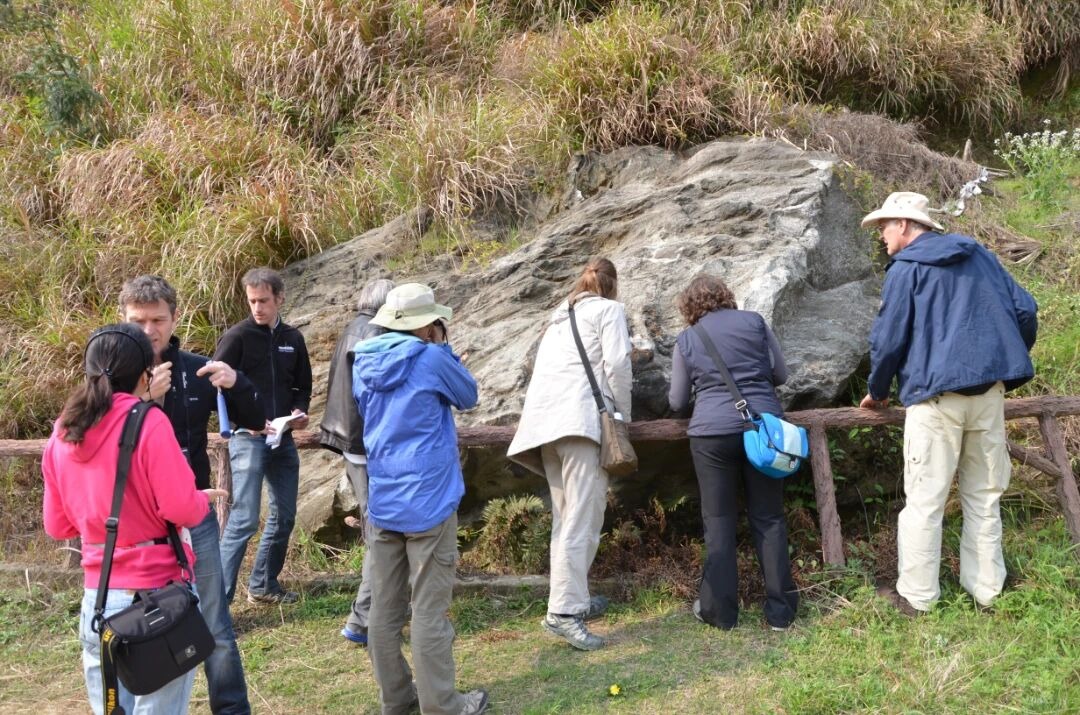
A Chinese–British expert group on a field visit at Hanchangchong
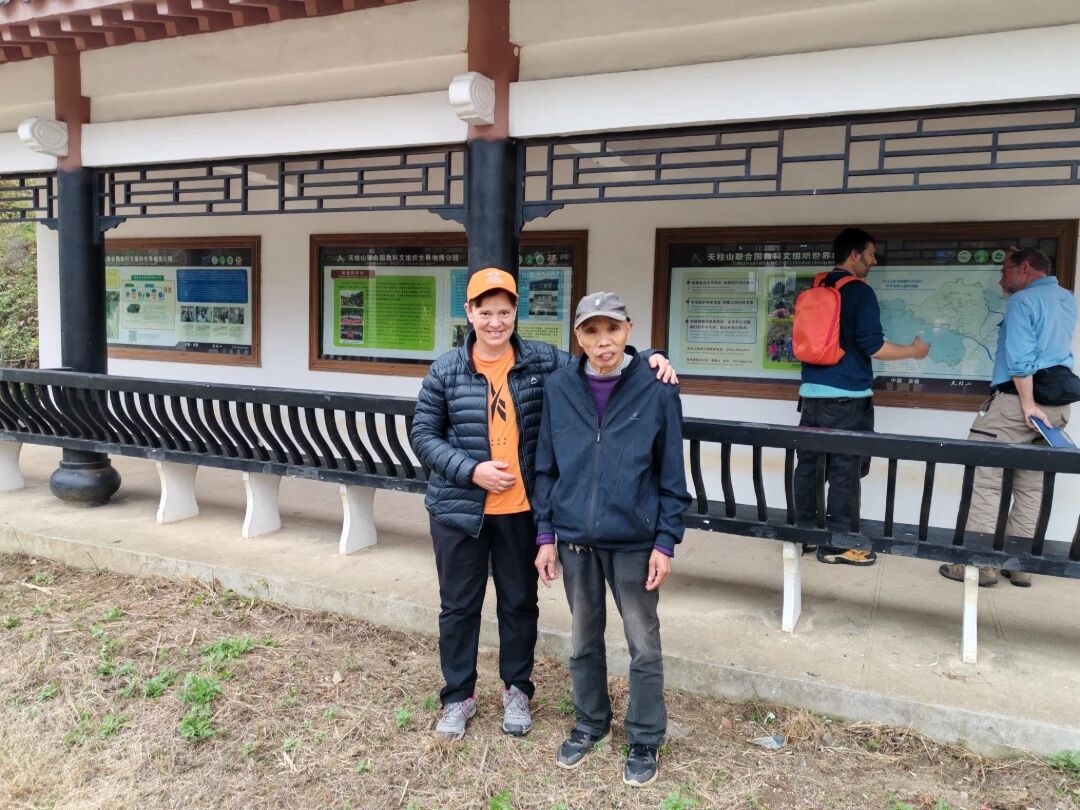
IUGS President Hassina Mouri at Hanchangchong with a local caretaker
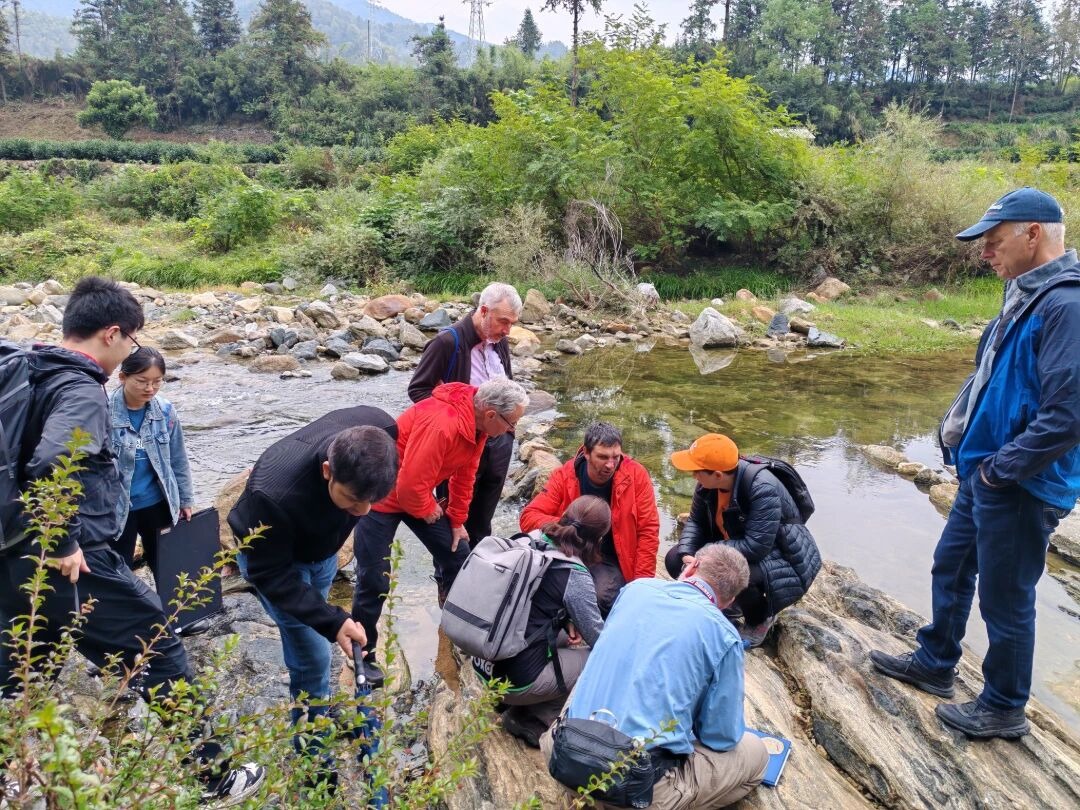
Post-conference field visit to Xindian during DEEP-2024
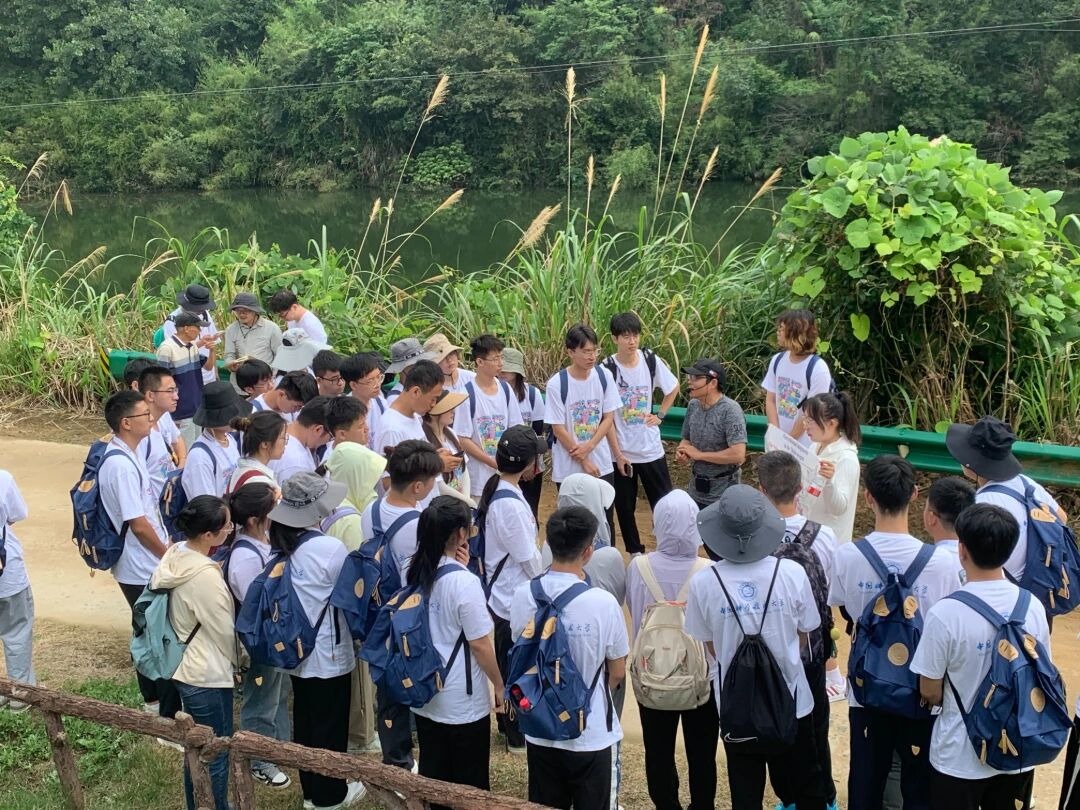
The University of Science and Technology of China's Dabie Mountains Summer Camp