
Three Geological Heritage Sites in Tianzhushan UNESCO Global Geopark Listed among World Geological Heritage Sites
 42
 2026-11-12
The International Union of Geological Sciences (IUGS) has recently released the third list of world geological heritage sites. China's Triassic Dabie Mountains ultrahigh-pressure metamorphic belt has been included, becoming Anhui Province's first world geological heritage site and ending the province's previous absence from the list; three sites in China were selected this time, bringing the national total to 13.
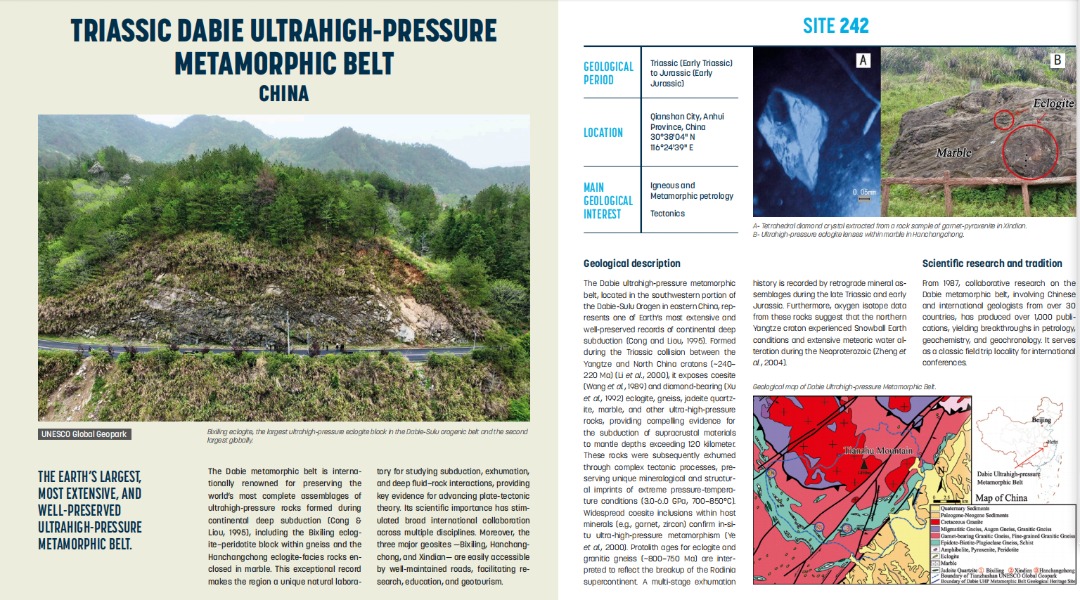
Screenshot of the geological heritage site page
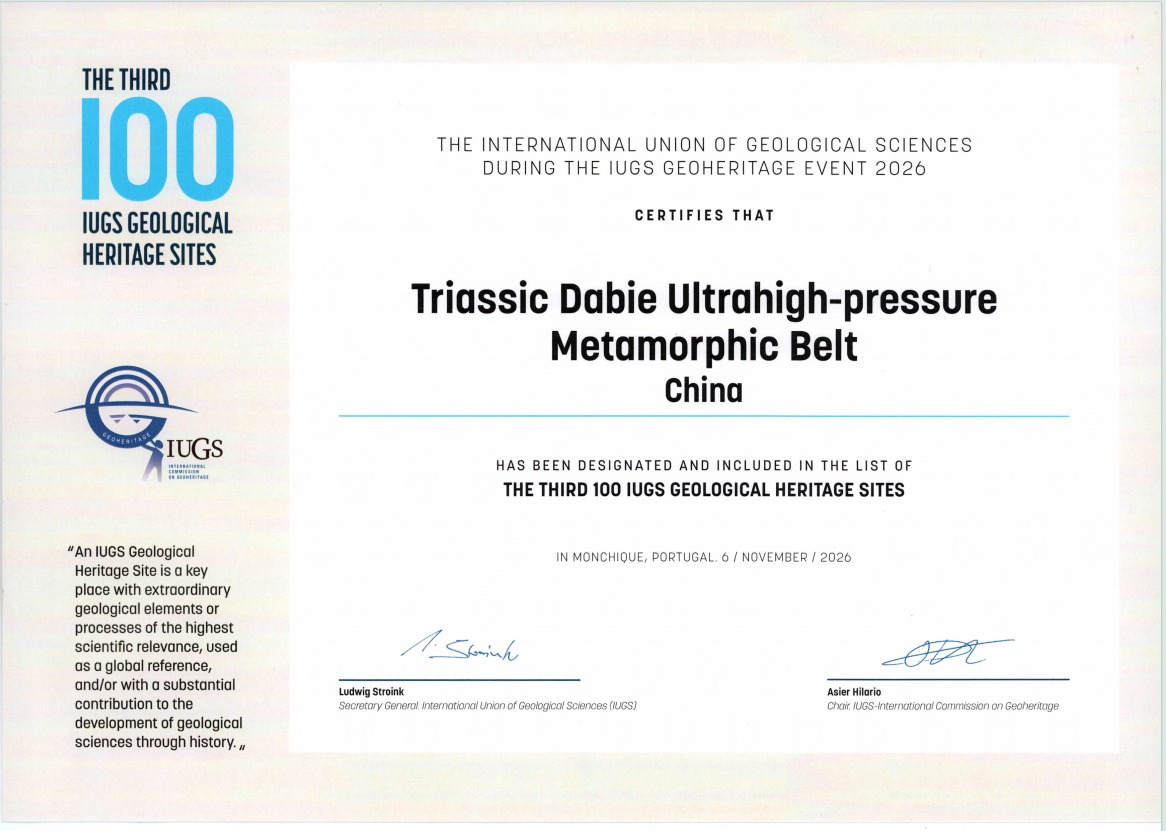
The certificate
The site lies in the western section of the Dabie–Sulu orogenic belt, formed by the collision of the North China Plate and the Yangtze Plate. It is internationally recognised as the world's largest ultrahigh-pressure metamorphic belt, the most deeply exhumed and the best exposed, with the richest assemblage of ultrahigh-pressure minerals and rocks. In the Triassic, 240 million years ago, the two continental blocks collided continent to continent; enormous volumes of continental crust were subducted to depths of 80 to 120 kilometres below the surface, and after undergoing ultrahigh-pressure metamorphism were rapidly exhumed back to the surface. The coesite and metamorphic microdiamond found in eclogite within the belt are the decisive evidence that continental crust can be subducted deep into the mantle; for this reason the belt is acclaimed as a 'natural laboratory' of continental dynamics and a 'geological history book' of deep continental subduction. The core area on this occasion comprises three typical metamorphic rock outcrops — Xindian and Hanchangchong (Shuanghe) in Qianshan City, and Bixiling in Yuexi County — all within the boundaries of Tianzhushan UNESCO Global Geopark.
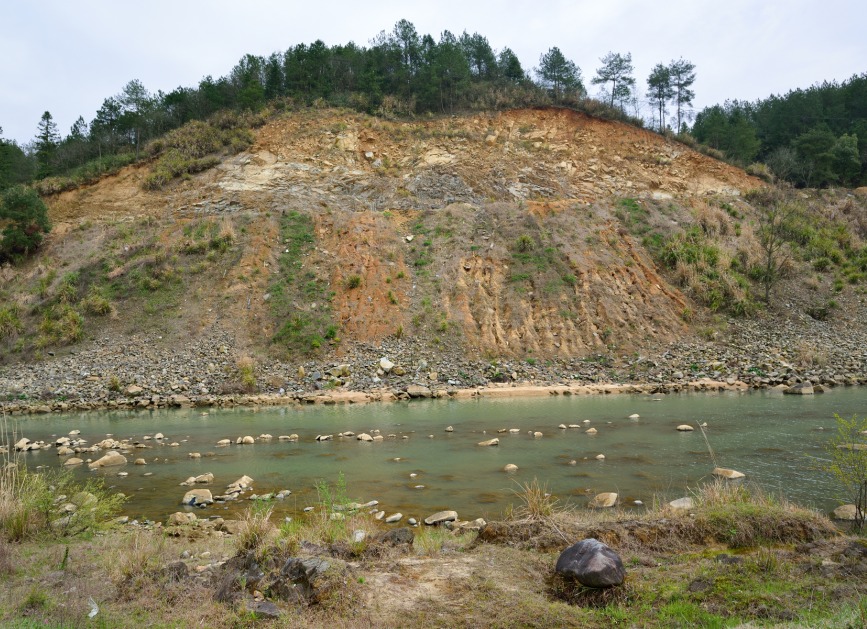
Bixiling — one of the world's largest exposed single eclogite bodies
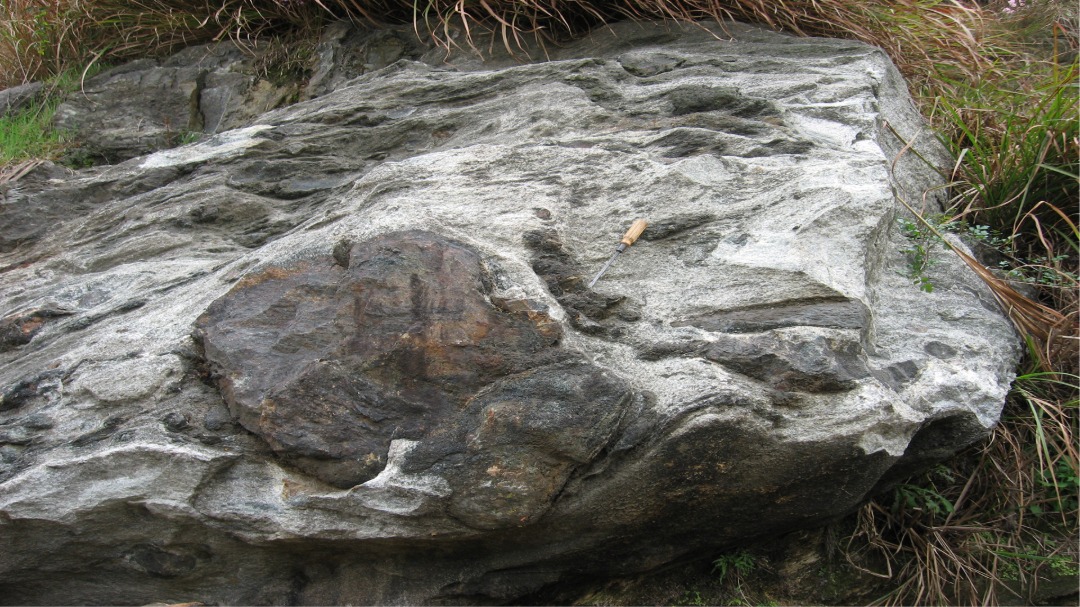
Hanchangchong (Shuanghe) — a classic eclogite outcrop within marble
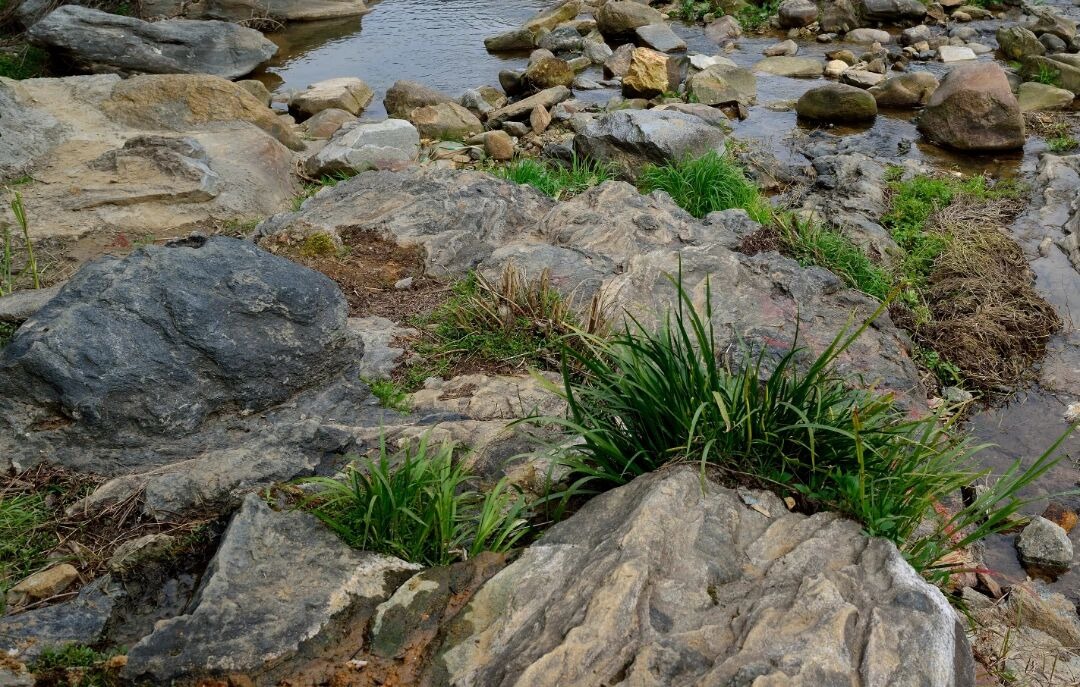
Xindian — diamond-bearing eclogite
Tianzhushan UNESCO Global Geopark puts protection first, applying tiered protection to the three sites: protective fencing has been installed, 24-hour surveillance has been connected to the scenic area's big-data centre, local villagers serve as full-time caretakers on regular patrols, and field research is conducted under standard reporting procedures. It also pursues research-driven development, maintaining long-term cooperation with the University of Science and Technology of China, Nanjing University and other institutions, providing field sites and facilities for teaching and research, and hosting or co-hosting professional conferences. Finally, it follows a path of rational use: protection markers and information boards are installed in a unified style, a popular-science corridor has been built, and geological study travel and geotourism have been developed.
In the next step, Tianzhushan UNESCO Global Geopark will make the three heritage sites key monitoring targets, deepen dedicated research on the ultrahigh-pressure metamorphic belt, and turn research results into popular-science education and geotourism, so that this world-class brand is well protected and well used.